Unlocking the Secrets of Myofascial Release Therapy

- Mar, 11 2026
- 0 Comments
- Hazel Clarkson
Ever felt like your muscles are tight no matter how much you stretch, foam roll, or massage? You might be dealing with your fascia - the invisible web that wraps around every muscle, bone, and organ in your body. Myofascial release therapy isn’t just another massage technique. It’s a targeted approach to releasing tension trapped in this connective tissue, and it’s helping thousands of people move better, sleep deeper, and live without chronic pain.
What Exactly Is Myofascial Release Therapy?
Myofascial release therapy is a hands-on technique that applies sustained pressure to the fascia - the thick, fibrous tissue surrounding muscles, bones, and organs. Unlike regular massage that focuses on muscle relaxation, myofascial release targets restrictions in the fascia itself. These restrictions can form after injury, surgery, poor posture, or even long-term stress. When fascia tightens, it doesn’t just limit movement - it pulls on surrounding structures, causing pain in places far from the original problem.
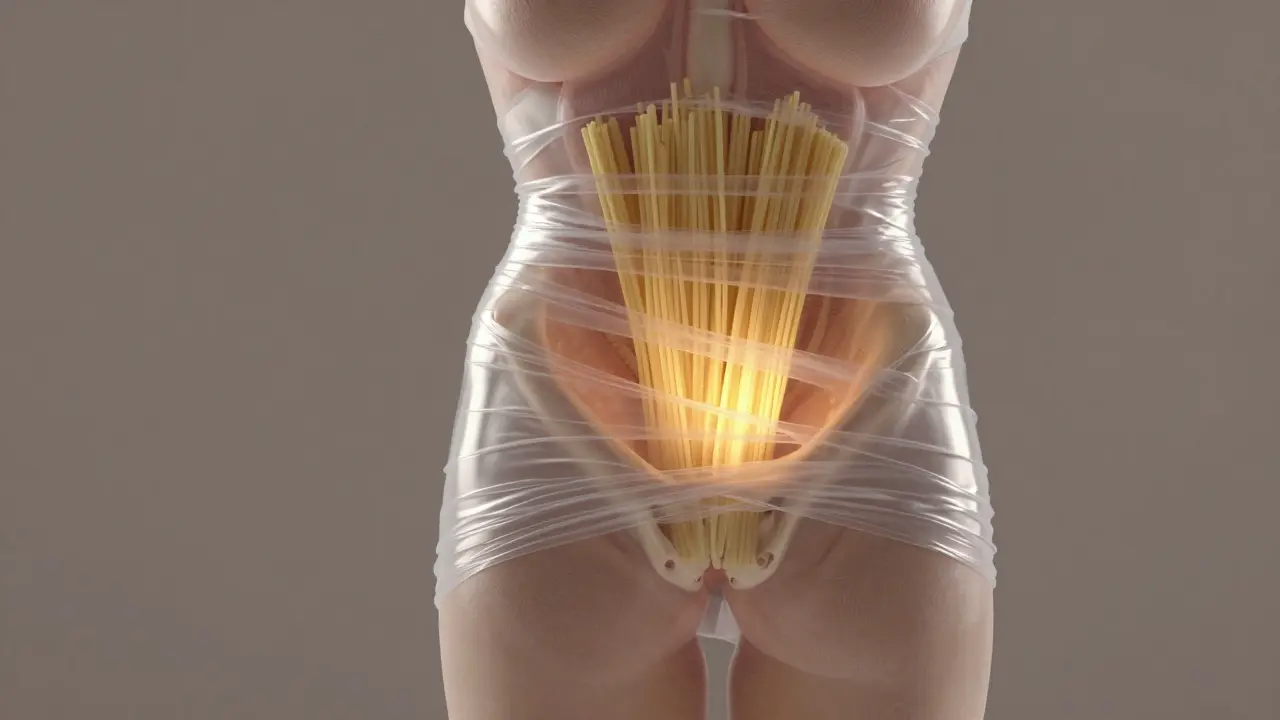
Think of fascia like plastic wrap wrapped tightly around a bundle of spaghetti. If one part gets stuck or shrinks, it pulls on everything else. That’s why someone with lower back pain might actually have a restriction in their hip fascia. Myofascial release gently unwraps those stuck areas, restoring natural glide and reducing pain at its source.
How Does Fascia Become Restricted?
Fascia is supposed to be smooth and slippery. But when your body heals from trauma - even minor ones like sitting too long or lifting awkwardly - it lays down extra collagen fibers. These fibers create adhesions, or "sticky" spots, that lock the fascia in place. Over time, these adhesions tighten, shorten, and lose elasticity.
Here are common causes:
- Repetitive strain (typing, driving, lifting)
- Surgical scars (even years later)
- Chronic poor posture (slouching, phone hunch)
- Emotional stress (tension stored in the neck, shoulders, jaw)
- Dehydration (fascia needs water to stay flexible)
One study from the Journal of Bodywork and Movement Therapies found that 85% of people with chronic pain had measurable fascial restrictions, even when imaging like MRIs showed no structural damage. That’s why so many people feel stuck - their bodies aren’t broken. They’re just stuck.
How Myofascial Release Works
A trained therapist uses gentle, sustained pressure - usually with their hands, elbows, or forearms - on the tight areas. They don’t just push. They wait. They listen. The key is time. Fascia responds slowly, like taffy. It takes 90 to 120 seconds of continuous pressure to start releasing.
Here’s what happens during a session:
- The therapist finds areas of tension by feeling for dense, stiff, or cool spots in the skin.
- They apply pressure - not deep, but steady - until they feel the tissue soften.
- They hold that pressure, letting the fascia gradually elongate.
- As the tissue releases, you might feel warmth, tingling, or even a wave of relaxation.
- The therapist follows the release path, moving along the fascial lines to find connected restrictions.
It’s not supposed to hurt. If it does, you’re getting a deep tissue massage, not myofascial release. True MFR feels like a slow, deep stretch - like pulling on a stubborn knot in a rope until it finally gives.
Where It Works Best
Myofascial release isn’t a cure-all, but it shines in specific cases:
- Chronic low back pain - Often linked to tight hip flexors or thoracolumbar fascia.
- Plantar fasciitis - Releases tension from the foot up through the calf and hamstrings.
- Headaches and TMJ - Releases fascia in the neck, jaw, and scalp.
- Post-surgical scarring - Helps break up adhesions after C-sections, knee replacements, or mastectomies.
- Repetitive strain injuries - Carpal tunnel, tennis elbow, and frozen shoulder respond well.
One woman in Memphis, after two years of failed physical therapy for shoulder pain, found relief after just three myofascial release sessions. Her therapist discovered a restriction in her diaphragm fascia - connected to her shoulder - from years of shallow breathing after a car accident. Once that was released, her shoulder pain vanished.
What to Expect in a Session
A typical session lasts 60 to 90 minutes. You’ll lie on a table, fully clothed (no oils or lotions). The therapist will start with your feet, move up your legs, then your back, shoulders, and neck. They’ll spend extra time on tight spots.
Afterward, you might feel:
- Deep relaxation
- Mild soreness (like after a good workout)
- Improved range of motion
- Reduced pain within hours
Some people feel emotional - tears, laughter, or sudden calm. That’s normal. Fascia stores more than just physical tension. It holds memories of trauma. Releasing it can bring up buried feelings. A good therapist will let you process it without pushing.
Home Practices to Support Therapy
You don’t need to rely only on therapists. Here’s how to keep your fascia healthy:
- Hydrate - Drink half your body weight in ounces of water daily. Dry fascia sticks.
- Move daily - Walk, stretch, swing your arms. Movement keeps fascia fluid.
- Use a foam roller - Roll slowly (1 inch per second) over tight areas. Stop and hold on tender spots for 60 seconds.
- Try a tennis ball - Place it under your foot, shoulder blade, or glutes. Lean into it gently. Breathe. Let the tissue melt.
- Practice diaphragmatic breathing - Deep belly breaths stretch the fascia around your spine and ribs.
One man in his 50s with chronic neck pain started using a tennis ball on his upper back before bed. Within two weeks, his headaches dropped from daily to once a week. He didn’t need a therapist anymore.

Who Should Avoid Myofascial Release?
It’s safe for most people, but not everyone:
- Open wounds or recent surgery - Wait until fully healed.
- Blood clots or deep vein thrombosis - Pressure could dislodge clots.
- Osteoporosis with fractures - Too much pressure risks injury.
- Severe diabetes with neuropathy - May not feel overpressure.
- Active cancer - Avoid direct pressure over tumor sites.
If you’re unsure, talk to your doctor. A licensed therapist will always screen you first.
Choosing the Right Practitioner
Not all massage therapists are trained in myofascial release. Look for:
- Certification in John Barnes Myofascial Release or similar method
- At least 100 hours of MFR-specific training
- Experience with your specific issue (e.g., headaches, post-surgery)
- Focus on sustained pressure - not quick kneading
Avoid practitioners who promise "instant relief" or use machines. True myofascial release is slow, quiet, and deeply personal.
Why It’s Not Just Another Massage
Traditional massage works on muscles. Myofascial release works on the system that holds muscles together. You can relax a muscle with pressure, but if the fascia around it is still stuck, the muscle will tense right back up.
Think of it this way: if your car’s tires are misaligned, no amount of washing the body will fix the pull. You need to fix the alignment. Myofascial release is the alignment adjustment for your body.
Is myofascial release therapy painful?
No, it shouldn’t be. You might feel a deep stretch or mild discomfort, but sharp pain means the pressure is too hard. True myofascial release works with the body’s natural response - not against it. If it hurts, speak up. A skilled therapist adjusts pressure to match your tolerance.
How many sessions do I need?
It varies. Some people feel better after one session. Chronic issues often need 4 to 8 sessions over 4 to 6 weeks. The goal isn’t to "fix" you in one go - it’s to retrain your fascia to stay loose. Maintenance sessions every 4 to 8 weeks help keep things moving.
Can I do myofascial release on myself?
Yes, but with limits. Foam rollers, tennis balls, and massage sticks can help maintain release between sessions. But you can’t reach every area, and self-treatment lacks the depth and precision of a trained therapist. Think of it like brushing your teeth - helpful daily, but you still need a dentist every six months.
Does myofascial release really work for chronic pain?
Yes - and there’s growing evidence. A 2023 review in the Journal of Orthopaedic & Sports Physical Therapy found that MFR significantly reduced pain and improved function in people with chronic low back pain, fibromyalgia, and tension headaches. It’s not a magic fix, but it’s one of the few therapies that addresses the root cause, not just symptoms.
How is myofascial release different from foam rolling?
Foam rolling is active - you move over the tool. Myofascial release is passive - the therapist holds still pressure for minutes. Foam rolling is great for warming up or loosening surface tension. MFR targets deeper, stuck layers that rolling can’t reach. Think of foam rolling as a warm-up and MFR as the repair job.
If you’ve tried everything - physical therapy, chiropractors, painkillers - and still feel stuck, myofascial release might be the missing piece. It doesn’t promise miracles. But for those who’ve been told "it’s all in your head," it offers something rare: a physical explanation, a gentle solution, and real relief.