Myofascial Release Therapy: How It Relieves Chronic Pain and Restores Movement

- Jan, 20 2026
- 0 Comments
- Tabitha Moorehead
Ever felt like your muscles are locked in a permanent cramp, no matter how much you stretch or massage? You’re not just tense-you might be dealing with tight fascia. Myofascial release therapy isn’t another trendy massage technique. It’s a targeted way to break up the sticky, restricted connective tissue that’s holding your body back. And for people with chronic back pain, neck stiffness, or headaches that won’t quit, it’s often the missing piece.
What Exactly Is Fascia?
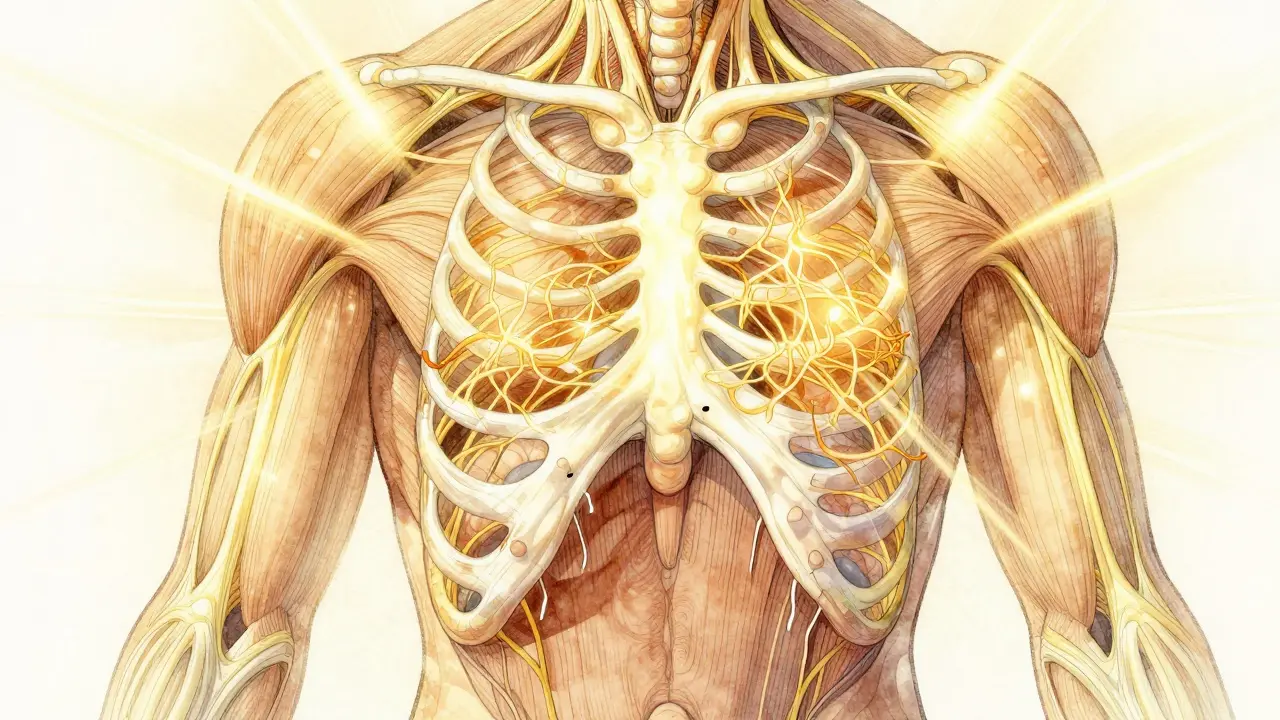
Fascia isn’t something you hear about in gym ads or on Instagram fitness posts. But it’s everywhere in your body. Think of it as a full-body web of collagen-rich tissue that wraps around your muscles, bones, nerves, and organs. Healthy fascia is slippery and flexible. It lets your muscles glide smoothly during movement. But when you sit too long, get injured, or stress your body, this tissue dries out and sticks together. It becomes thick, rigid, and painful. That’s when trigger points form-knots that radiate pain to other areas, like a headache from a tight neck muscle or knee pain from a stiff hip.
Traditional stretching doesn’t fix this. You can pull on a muscle all day, but if the fascia around it is glued down, you’re not getting real relief. Myofascial release works differently. It applies sustained, gentle pressure to those stuck areas. Not deep tissue banging. Not quick rubbing. Slow, patient pressure-often held for 90 seconds to 5 minutes-lets the fascia slowly unwind like a tangled rope being gently untwisted.
How Myofascial Release Therapy Works
When fascia tightens, it doesn’t just hurt. It pulls your skeleton out of alignment. A tight IT band can tilt your pelvis. A stiff thoracic fascia can slump your shoulders forward. This misalignment creates wear and tear on joints, leading to arthritis-like pain even in younger people. Myofascial release doesn’t just ease pain-it corrects the root cause.
Therapists use their hands, elbows, or tools like foam rollers and massage balls. But it’s not about strength. It’s about awareness. A good therapist will ask you to breathe deeply while applying pressure. You might feel a burning or aching sensation-this isn’t pain from damage, it’s the fascia releasing. Many people report a sudden warmth or tingling, followed by a wave of relaxation. That’s your nervous system shifting out of fight-or-flight mode and into repair mode.
One 2023 study tracked 120 people with chronic lower back pain. Half received standard physical therapy. The other half got myofascial release three times a week for six weeks. The myofascial group reported a 68% average reduction in pain scores. The control group? Only 22%. The difference wasn’t just in pain levels-it was in movement. People in the myofascial group could bend over to tie their shoes without gripping their lower back. They could turn their head fully while driving. These aren’t minor wins. These are life-changing shifts.
Who Benefits the Most?
Myofascial release isn’t for everyone-but it’s a game-changer for specific groups:
- People with fibromyalgia: Studies show it reduces widespread pain and fatigue better than medication alone.
- Office workers with neck and shoulder tension: Tightness from hunching over screens often starts in the upper back fascia.
- Runners and athletes: IT band syndrome, plantar fasciitis, and shin splints often stem from fascial adhesions, not muscle weakness.
- Post-surgery patients: Scar tissue forms fascial restrictions. Release therapy helps restore mobility after knee or shoulder surgery.
- Those with unexplained headaches: Tension headaches often come from the occipital fascia at the base of the skull. Releasing it can stop daily migraines.
It’s not a cure-all. If you have a herniated disc, a broken bone, or an active infection, this therapy isn’t safe. But for chronic, dull, deep pain that moves around and doesn’t respond to rest or ice-this is where you start.
What to Expect in a Session
Most sessions last 60 to 90 minutes. You’ll lie on a table, usually wearing loose clothing or underwear. The therapist won’t use oil or lotion. They need direct contact with the skin to feel the fascia’s resistance. They’ll start by scanning your body-pressing lightly in different areas to find where the tissue feels stuck. It’s like mapping a hidden landscape of tension.
Once they find a trigger point, they’ll hold pressure. You might feel a sting at first, then a dull ache. That’s normal. You’ll be asked to breathe into the area. Don’t tense up. Let your body soften. The therapist might ask you to move slightly-a slow shoulder roll, a gentle knee bend-to help the fascia release with motion. It’s not passive. You’re part of the process.
Afterward, you might feel sore for a day or two. That’s not a bad sign. It means the tissue is reorganizing. Drink water. Move gently. Avoid heavy lifting. Your body is healing, not breaking down.
Can You Do It Yourself?
Yes-and you should. Professional sessions are powerful, but daily self-care is what keeps the relief lasting. Here’s how to start:
- Get a firm foam roller or two tennis balls in a sock.
- Roll slowly-no bouncing. Spend at least 2 minutes on each tight spot.
- When you find a tender area, pause. Hold the pressure. Breathe. Wait for the pain to drop by 50%.
- Focus on the back of your thighs, calves, upper back, and the base of your skull.
- Do this for 10 minutes every morning. No more, no less.
Don’t roll directly over bones or joints. Avoid the lower back unless you’re trained. And never roll if you feel sharp pain. This isn’t a massage-it’s a slow rewiring of your body’s structure.
One woman in Brisbane, 54, had sciatica for three years. She tried injections, physio, yoga. Nothing stuck. Then she started rolling her glutes with a tennis ball every morning. Within three weeks, the shooting pain down her leg vanished. She didn’t need surgery. She just freed the fascia that had been pulling on her sciatic nerve.

What Doesn’t Work
Myofascial release isn’t magic. It won’t fix a pinched nerve or a torn tendon. It won’t replace physical therapy for post-stroke recovery. And it’s not a substitute for medical diagnosis. If you have numbness, tingling, or weakness in your limbs, see a doctor first.
Also, avoid deep tissue massage if you think it’s the same thing. Deep tissue uses force to break muscle fibers. Myofascial release uses patience to soften connective tissue. One is aggressive. The other is restorative.
And don’t expect instant results. One session won’t erase years of tension. Most people need 4-6 sessions to notice real change. Consistency beats intensity.
How to Find a Good Therapist
Not every massage therapist knows myofascial release. Look for credentials: certified myofascial release therapist (MFR), or someone trained by John Barnes (the pioneer of modern MFR). Ask if they use sustained pressure, not kneading or friction. Ask how long they hold each point. If they say ‘a few seconds,’ walk away.
Check reviews that mention specific results: ‘My headaches stopped,’ ‘I could finally turn my head,’ ‘I stopped taking painkillers.’ Generic praise like ‘relaxing’ or ‘nice ambiance’ doesn’t mean they know how to release fascia.
In Brisbane, clinics like The Body Source and Movement Lab offer certified MFR. But don’t limit yourself to big names. Ask your physiotherapist for a referral. Often, the best practitioners work out of small studios.
Real Results, Not Hype
Myofascial release therapy isn’t about luxury spa treatments. It’s about reclaiming your body’s natural movement. People who stick with it don’t just feel better-they move differently. They walk taller. They sleep deeper. They stop bracing for pain. One man in his 60s told me he hadn’t been able to put on his own socks in five years. After six sessions of myofascial release, he could do it without holding onto the counter. That’s not a miracle. That’s fascia doing what it’s supposed to do: letting your body work.
If you’ve tried everything and still ache, it’s not your fault. You just haven’t found the right key. Myofascial release might be it.
Is myofascial release therapy painful?
It can feel uncomfortable, but it shouldn’t hurt. You’ll feel a deep ache or burning sensation when pressure is applied to tight fascia, but sharp or shooting pain means you’re going too hard. The goal is to stay within a 5-7 out of 10 discomfort range. If it feels like injury, stop. Real release happens when your body relaxes into the pressure, not when you’re tensing up against it.
How often should I get myofascial release therapy?
For chronic pain, start with once a week for 4-6 weeks. After that, reduce to every two weeks, then monthly for maintenance. If you’re doing self-care with a foam roller, aim for 10 minutes daily. Consistency matters more than intensity. One session a month won’t undo years of tension.
Can myofascial release help with headaches?
Yes-especially tension headaches and migraines linked to neck and shoulder tightness. The fascia at the base of the skull (occipital fascia) often becomes stuck from screen use or poor posture. Releasing it can reduce headache frequency by up to 70% in some cases. Many people report feeling lighter in the head after just one session.
Is foam rolling the same as professional myofascial release?
Foam rolling is a self-care tool that mimics myofascial release, but it’s not the same. Professionals use precise, sustained pressure for 2-5 minutes per point, often combining it with guided movement. Foam rolling is usually faster and less targeted. It’s great for maintenance, but for deep, chronic restrictions, professional therapy is more effective.
How long does it take to see results?
Some people feel better after one session-especially if their pain is recent. For long-term issues (over 6 months), it usually takes 3-6 sessions to notice real change. The body needs time to relearn how to move without tension. Patience is key. Don’t quit after two sessions if you don’t feel 100% better.
Can myofascial release help with sports injuries?
Absolutely. Runners with plantar fasciitis, cyclists with IT band syndrome, and swimmers with shoulder tightness often see faster recovery with myofascial release. It doesn’t heal the injury itself, but it removes the fascial restrictions that slow healing and cause compensatory pain. Used with rehab exercises, it cuts recovery time by 30-40%.
If you’re tired of masking pain with pills or temporary fixes, try myofascial release. It’s not flashy. It doesn’t promise instant results. But for millions of people with stubborn, deep pain, it’s the quiet, effective solution they’ve been searching for.