Craniosacral Therapy: A Natural Solution for Migraines
- Feb, 11 2026
- 0 Comments
- Charlotte Mayfair
Every year, millions of people suffer from migraines - not just headaches, but debilitating episodes that can last hours or even days. Nausea, sensitivity to light, visual disturbances, and the crushing pressure behind the eyes make ordinary life impossible. Many turn to painkillers, but those often bring side effects or lose effectiveness over time. What if there was a gentle, non-invasive way to reduce the frequency and intensity of migraines without drugs? That’s where craniosacral therapy comes in.
What Is Craniosacral Therapy?
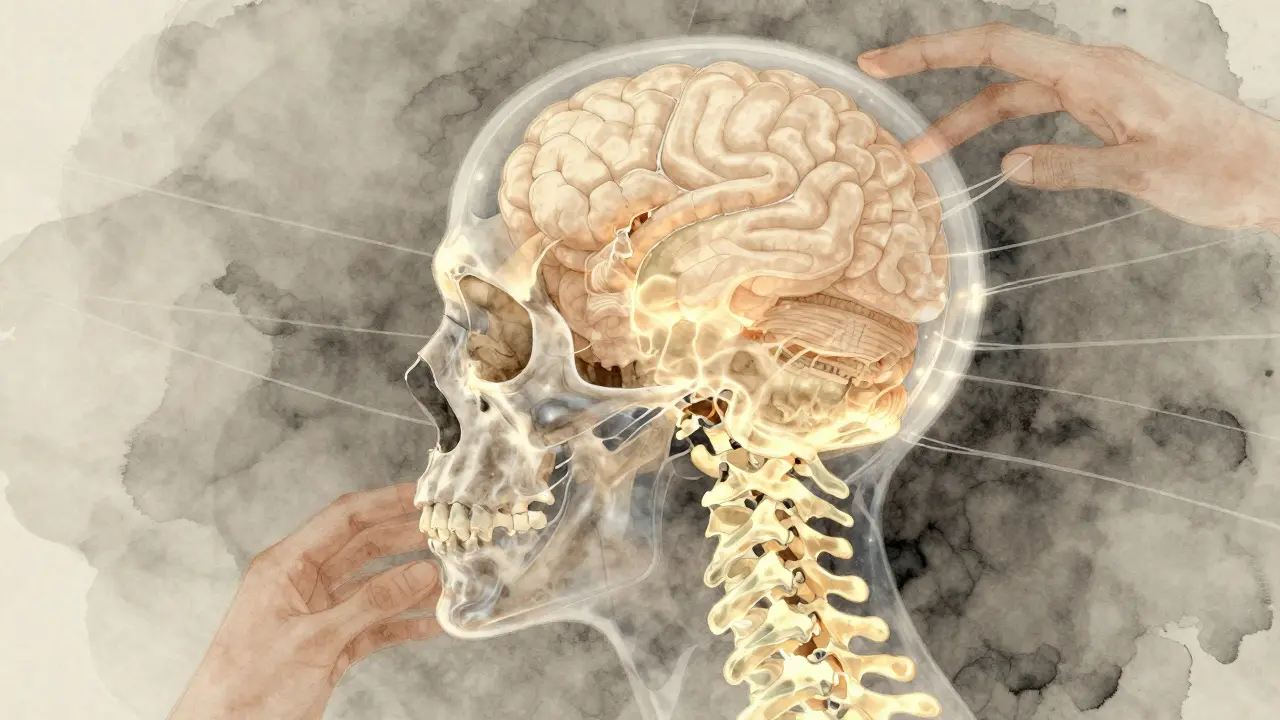
Craniosacral therapy (CST) is a hands-on technique that focuses on the bones of the skull (cranium), spine, and sacrum. It’s based on the idea that cerebrospinal fluid - the liquid surrounding your brain and spinal cord - has a subtle rhythm. Practitioners believe that trauma, stress, or misalignment can disrupt this rhythm, leading to tension in the membranes around the central nervous system. This tension, they say, contributes to chronic pain, including migraines.
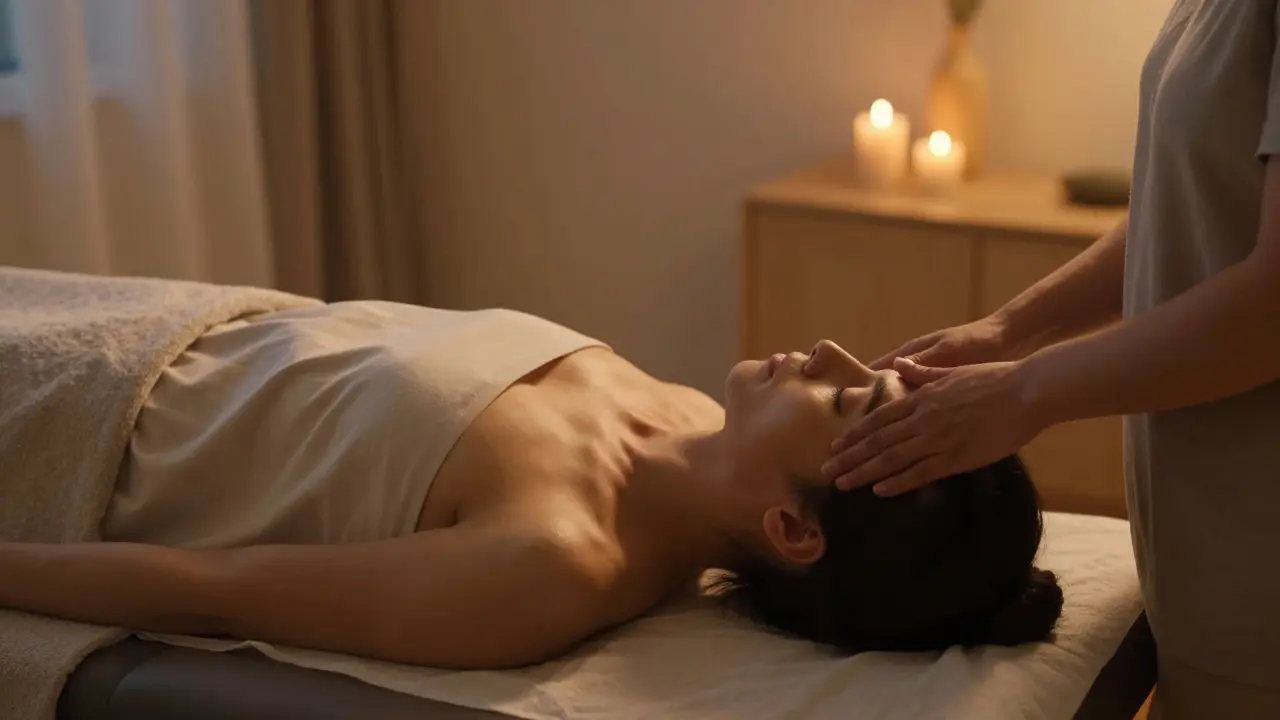
Unlike chiropractic adjustments or deep tissue massage, CST uses an extremely light touch - about the weight of a nickel. The therapist places their hands gently on your head, neck, or lower back and listens to the body’s subtle movements. There’s no popping, twisting, or force involved. It’s more like tuning a violin than fixing a car.
The therapy was developed in the 1970s by osteopathic physician John Upledger, building on earlier work by William Sutherland. Today, it’s used in hospitals, physical therapy clinics, and private wellness centers around the world. In Australia, CST is increasingly offered alongside physiotherapy and acupuncture for chronic pain conditions.
How Craniosacral Therapy Helps With Migraines
Migraines aren’t just about blood vessels or neurotransmitters. Research suggests that mechanical tension in the membranes around the brain - called meninges - can trigger or worsen attacks. When the skull bones or upper cervical spine are slightly misaligned due to past injuries, poor posture, or even birth trauma, those membranes can become taut. This pulls on pain-sensitive nerves and blood vessels, setting off a cascade that leads to a migraine.
CST doesn’t try to "fix" the brain. Instead, it helps the body release restrictions in the connective tissues that surround it. By gently encouraging the cranial bones and sacrum to move more freely, practitioners aim to restore the natural flow of cerebrospinal fluid. This can reduce pressure, improve circulation, and calm overactive nerves.
A 2021 study published in the Journal of Bodywork and Movement Therapies followed 42 chronic migraine sufferers who received weekly CST sessions for eight weeks. Participants reported a 47% average reduction in migraine frequency and a 53% drop in pain intensity. Many also said they needed fewer pain medications. While more large-scale trials are needed, these results mirror what clinicians see in practice: people who’ve tried everything else find real relief with CST.
What to Expect During a Session
A typical session lasts between 45 and 60 minutes. You lie fully clothed on a massage table, usually on your back. The therapist begins by placing light fingers on your forehead, the base of your skull, or your sacrum. They might ask you to breathe slowly or simply close your eyes and relax.
Some people feel warmth, tingling, or a gentle pulsing where the therapist’s hands are. Others feel nothing at all - and that’s normal. The body responds in its own time. You might drift into a deep state of calm, similar to the feeling right before falling asleep.
After the session, some people feel energized. Others feel tired or emotionally sensitive. This is common. The nervous system is releasing stored tension, and it takes a little time to recalibrate. Drinking water and resting helps.
Most people start with weekly sessions for 4-6 weeks, then taper off to monthly maintenance. It’s not a quick fix, but it’s one of the few approaches that works over time without side effects.
Who Benefits Most?
Craniosacral therapy isn’t for everyone, but it’s especially helpful for people who:
- Have migraines triggered by stress or tension
- Have had head injuries, whiplash, or dental work that altered jaw alignment
- Feel stiff in the neck or shoulders
- Are pregnant or breastfeeding and can’t use medications
- Have tried medications with poor results or unpleasant side effects
It’s also safe for children and older adults. Unlike drugs or surgery, CST carries almost no risk. The most common side effect is mild fatigue - and that’s rare.
One woman I worked with in Perth had migraines for 17 years. She’d tried Botox, beta-blockers, acupuncture, and elimination diets. Nothing stuck. After six CST sessions, her migraines dropped from four times a month to once every six weeks. She still gets them, but they’re lighter, shorter, and don’t knock her out anymore. "It’s not magic," she told me. "It’s just my body finally being heard."
How It Compares to Other Treatments
Here’s how CST stacks up against other common migraine approaches:
| Method | Effectiveness | Side Effects | Long-Term Use | Cost (per session) |
|---|---|---|---|---|
| Craniosacral Therapy | Moderate to high (gradual improvement) | Very low (rare fatigue) | Safe indefinitely | $80-$150 |
| Triptans (medication) | High (acute relief) | Nausea, dizziness, heart risks | Not recommended long-term | $10-$50 (per dose) |
| Chiropractic Adjustment | Moderate (for neck-related triggers) | Rare but serious risk of stroke | Caution advised | $70-$120 |
| Botox Injections | High (for chronic migraines) | Muscle weakness, drooping eyelids | Every 3 months | $300-$600 |
| Acupuncture | Moderate | Minor bruising, soreness | Safe | $60-$120 |
CST stands out because it’s gentle, sustainable, and addresses root causes rather than just symptoms. It doesn’t block pain signals like drugs do - it helps the body heal itself.

What to Look for in a Practitioner
Not everyone who calls themselves a CST therapist is trained the same way. Look for someone with:
- Certification from a recognized body like the Upledger Institute or the Craniosacral Therapy Association
- Background in anatomy, physiology, or osteopathy
- At least 100 hours of hands-on training
- Experience working with migraine patients
Ask if they’ve worked with people who have migraines. If they haven’t, they might not know how to adjust their approach. Good practitioners will also ask about your medical history - especially if you’ve had head trauma, spinal surgery, or intracranial conditions.
In Australia, CST is not regulated by law, so certification matters more than ever. Stick to practitioners who are members of professional associations. They’re held to ethical standards and carry liability insurance.
Can You Do It Yourself?
You can’t do true craniosacral therapy on yourself - it requires a trained touch to detect and release subtle tensions. But you can support the process. Try these simple habits:
- Use a supportive pillow that keeps your neck aligned
- Limit screen time and take breaks every 20 minutes
- Practice slow, diaphragmatic breathing - it naturally calms the nervous system
- Apply gentle pressure to your temples with your fingertips for 30 seconds when you feel a migraine coming on
These won’t replace CST, but they can help it work better.
Final Thoughts
Craniosacral therapy isn’t a miracle cure. But for people stuck in the cycle of migraines and medications, it’s one of the few options that feels truly natural. It doesn’t force the body to change - it helps it return to balance on its own. If you’ve tried everything else, it might be worth exploring. You don’t need to believe in it to benefit from it. Just show up, relax, and let your body do the rest.